Field notes from the shop floor.
Short, practical pieces on industrial AI, process control, and the margin hiding in data you already collect.

The 14% revenue opportunity hiding inside one rate card
A historical pricing replay found a modeled 14% revenue opportunity without a blanket discount. The executive decision was where a margin concession would buy profitable conversion, and how to govern the test.

Your fraud model has never seen the attack that will work
At a major unsecured payday loan company, five models scored the same applications on the same days. The behavioural model caught 85% of a fraud ring. The model trained on labelled fraud caught a third of it. The one that worked had never been shown a single example of fraud.

Why thin-file approvals look fine in backtest and fail in production
A thin-file scorecard can clear validation and still lose money, because a scorecard and a cutoff are two different objects and only one of them was tested. Your backtest structurally cannot contain the population a loosened cutoff approves.

Why construction estimates lose their margin after the bid is won
Construction estimates fade between bid margin and closeout margin, in the same direction, year after year. The loss is not execution. It is committed at bid by a rule nobody has remeasured, and competitive bidding makes it worse on purpose.
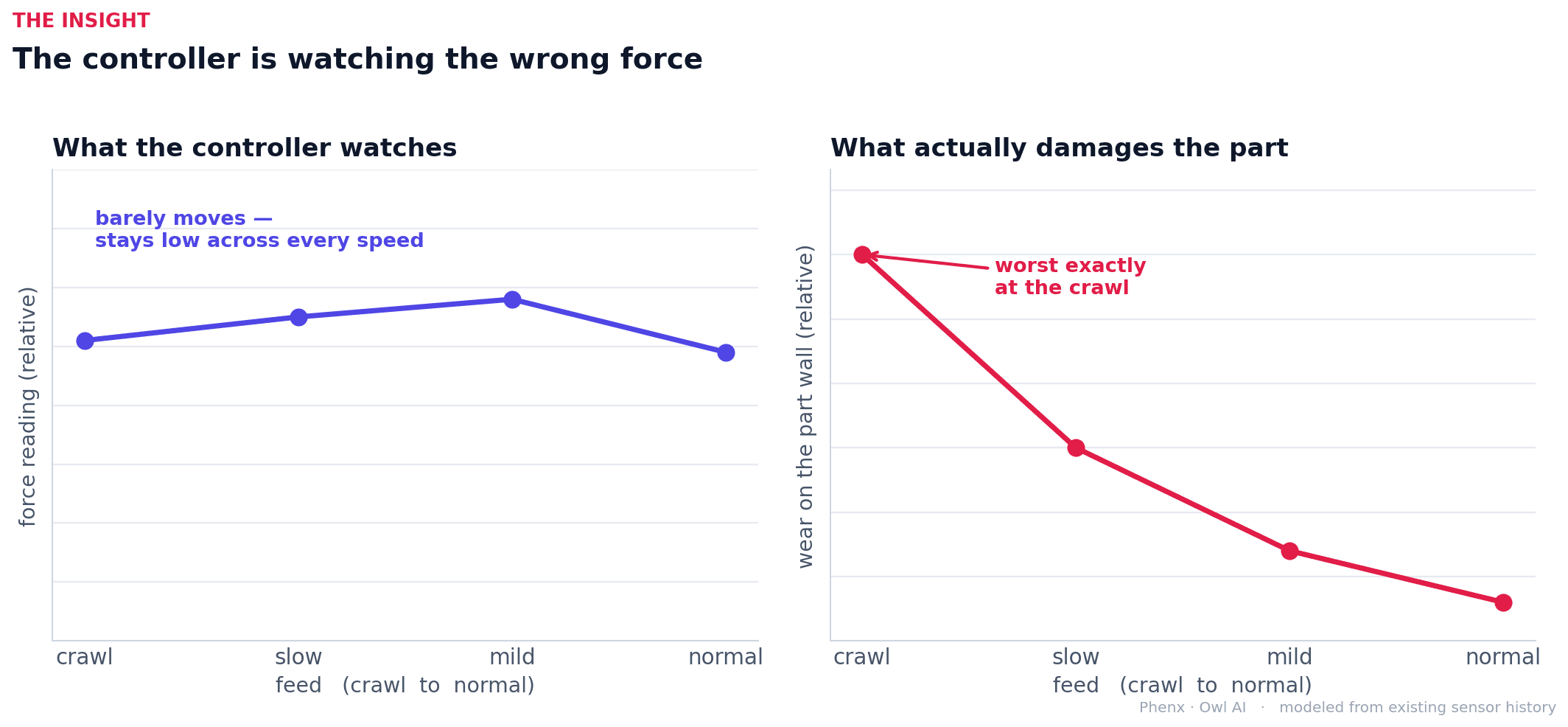
Why your adaptive controller might be causing the defects it’s trying to prevent
When cutting force climbs, the controller slows the tool. But on many processes the damage is in the dwell, not the peak, so the “safe” move quietly wears the part. Here is how to find it in your own data.

Why AI Still Struggles with Negation and How We Can Fix It
LLMs flounder at one of the most basic cognitive tasks: understanding negation. Not because the task is too complex, but because their design wasn’t built for it — and in medicine, law, and finance, a misread “not” is dangerous.
Looking for our ML engineering deep dives — model internals, training experiments, tooling? They live in Research →